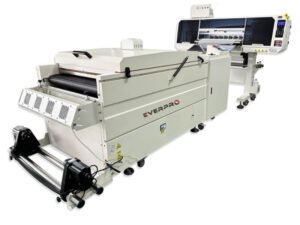
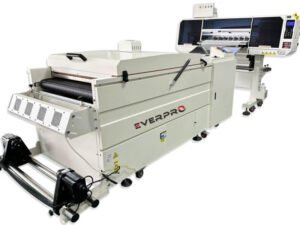
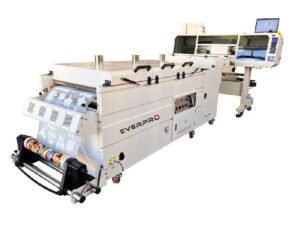
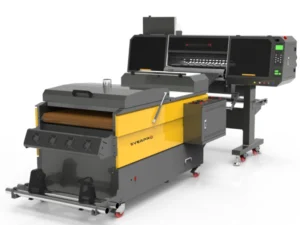
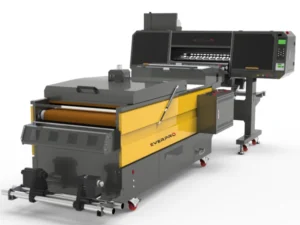
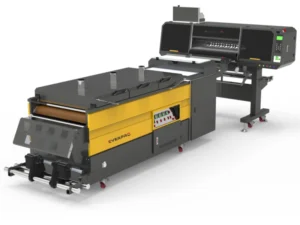
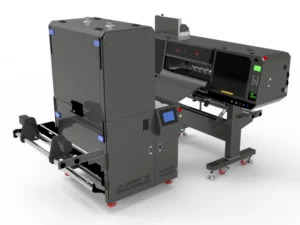
Everpro Print supplies DTF printers and powder shaker-dryers for garment printing and transfer production. Browse the models below to compare available equipment.
To help us recommend a setup, share your largest transfer size, fabric types, expected daily output, and destination country.
Before ordering, confirm the printer configuration, compatible consumables, RIP software and license, installation requirements, and support included in your quotation. A heat press is also needed to apply garment DTF transfers; check whether it is included or purchased separately.
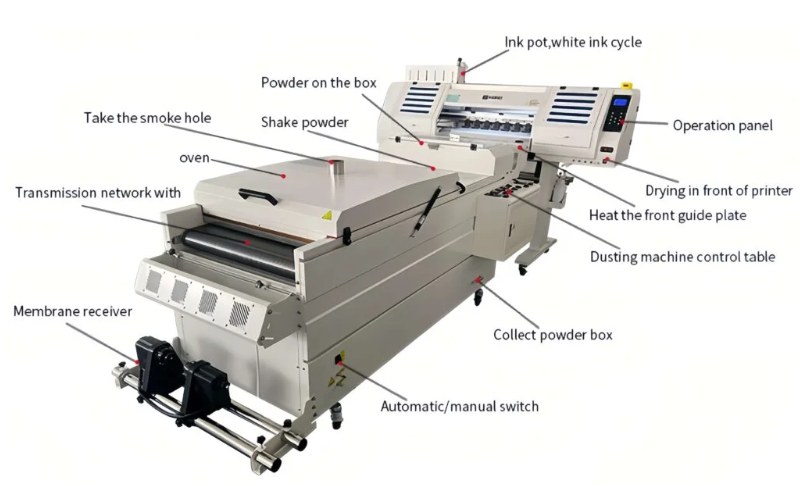
A DTF (direct-to-film) printer prints a design onto transfer film. Adhesive powder is then applied and cured. A heat press transfers the design from the film onto a garment.
A garment DTF setup usually includes a printer, powder application and curing equipment, a heat press, RIP software, and compatible ink, film, and powder. Check your quotation to confirm which items are included.
How to Choose a DTF Printer?
Choose a setup based on your transfer sizes, production needs, and workspace.
• Print width: Confirm the usable width fits your largest designs.
• Output: Compare production speeds at the same print mode and quality.
• Matching equipment: Check film width and output compatibility with the powder shaker-dryer.
• Installation: Confirm space, power, ventilation, and daily maintenance requirements.
• Sample testing: Review transfers made with your artwork and garment materials.
Ask for an itemized quotation showing the equipment, software, consumables, and support included.
How Does Garment DTF Printing Work?
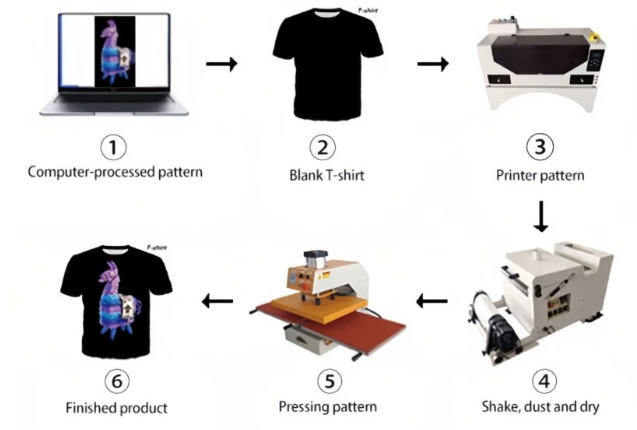
The diagram shows the main stages from artwork preparation to a finished garment.
Prepare the artwork
Use compatible RIP software to prepare the design for printing.
Print onto transfer film
Print the design using the ink and film recommended for your system.
Apply powder and cure
Apply compatible adhesive powder, remove the excess, and cure it according to the consumable supplier’s instructions.
Heat press and peel
Press the transfer onto the garment, then peel the film according to its instructions.
Test the settings on your actual garment before production. Temperature, time, pressure, and peeling method depend on the fabric and transfer materials.
Is DTF Printing Right for Your Business?
Potential Benefits
• Print multicolor garment transfers without preparing a separate screen for each color.
• Prepare transfers in advance and apply them to garments when needed.
• Use the process on different compatible fabrics after testing.
Practical Considerations
• White ink systems need regular maintenance.
• Film, powder, ink, cleaning supplies and replacement parts contribute to running costs.
• Large printed areas can affect garment feel and breathability.
• Results depend on the fabric, consumables, curing, and pressing settings.
Compare sample quality, production time, and total cost for your actual orders before choosing a printing process.
DTF Printing Applications & Material Testing
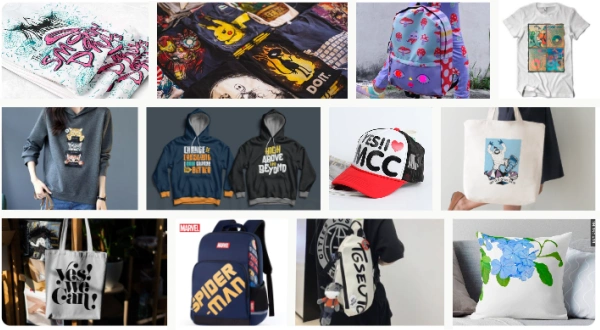
Garment DTF transfers are commonly used for T-shirts, hoodies, sweatshirts, tote bags, and other textile products.
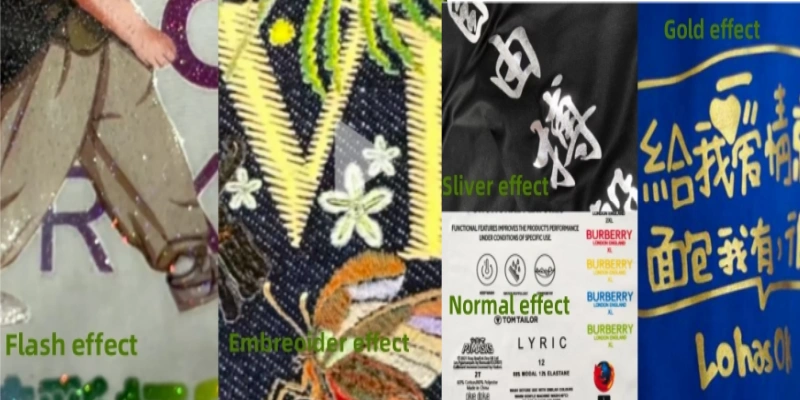
Test your actual fabric before production, especially coated, water-repellent, highly stretchable, or heat-sensitive materials.
Check:
• Adhesion and edge lifting
• Print feel and stretch
• Color changes or dye migration
• Wash performance under the intended care conditions
For hats, shoes, and shaped items, confirm that suitable pressing equipment can apply even heat and pressure.
Share your fabric details, artwork size, and intended use when asking about sample testing.
DTF Printer FAQs
What maintenance does a DTF printer need?
Follow the maintenance schedule for your printer model and ink system. Routine tasks may include nozzle checks, cleaning specified maintenance parts, checking waste ink levels, and following white ink circulation or agitation instructions where applicable.
Ask for the daily maintenance checklist and shutdown procedure before ordering. Use the recommended cleaning materials and follow the manufacturer’s instructions; do not wipe or soak the printhead unless specifically instructed.
What affects the total cost of a DTF setup?
The total cost depends on the printer configuration, powder shaker-dryer, heat press, software and license, starter consumables, shipping, and any applicable import charges.
Running costs include ink, film, powder, electricity, cleaning supplies, replacement parts, and labor. Ask for an itemized quotation and compare what is included, rather than comparing the printer price alone.
What is the difference between garment DTF and UV DTF printing?
Garment DTF printing uses transfer film, textile ink, and hot-melt adhesive powder. The design is applied to garments using a heat press. It is commonly used for T-shirts, hoodies, and other textile products.
UV DTF printing uses UV-curable ink and an adhesive film system. The design is typically applied to hard surfaces, such as glass, metal, and plastic, without a garment heat press.
The two systems use different equipment and consumables and are not interchangeable. Choose garment DTF for fabric decoration and consider UV DTF for hard-surface decoration. Test your actual material before ordering; adhesion, wash resistance, and suitability depend on the surface and consumables used.
WhatsApp us
Get Your Printer Configuration & Quote
Tell us what you need to print. Share your material, target output and destination country so we can recommend a suitable configuration and prepare a quotation.
Our team replies from an @everproprint.com email address.